There are various digital systems in use in schools today, which are used to administer academics, administration, and learning. Student Information Systems (SIS) and Learning Management Systems (LMS) are considered to be two of the most popular platforms.
The two are easily mixed up and even used interchangeably, but the functions they perform are very different.
We will simply clarify in this guide:
- What an SIS is
- What an LMS is
- The major differences between SIS and LMS
- At the schools where one or both are required
- The reason why SIS and LMS are becoming more popular in modern institutions.
What Is a Student Information System (SIS)?
The Student Information System (SIS) is the school record system.
It handles the base student data and administrative procedures throughout the whole academic life span.
An SIS typically manages:
- Demographics of students and enrollment
- Admissions and registrations
- Attendance records
- Grades, GPA, and transcripts
- Course scheduling and course management
- Billing, fees, and payments
- Portals between parents, students, and teachers
- Reporting and compliance requirements.
Concisely, an SIS provides answers to the question:
- What is the student, what is his or her official record?
What Is a Learning Management System (LMS)?
A Learning Management System (LMS) is concerned with instruction and delivery of learning.
It is created to teach, do coursework and interact with the students within the classroom, either physical or virtual.
An LMS typically manages:
- Course materials and course content.
- Submissions and assignments.
- Quizzes and exams
- Discussions and forums
- Progress and achievement in learning.
- Online courses and distance learning.
An LMS answers the question:
- What is the learner reading and what is he/she interacting with in the course materials?
SIS vs LMS: Key Differences at a Glance
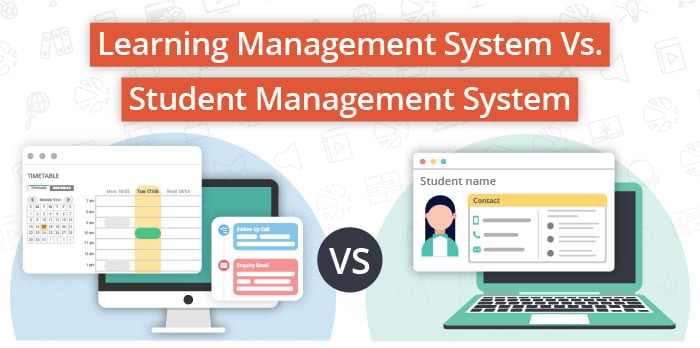
Why SIS and LMS Are Often Confused
The confusion occurs due to the fact that both systems are involved with academic information, in particular, grades.
However:
- The LMS produces grades in instruction.
- The official grades and transcripts are kept in the SIS.
Think of it this way:
- LMS = classroom activity
- SIS = formal academic history.
Do Schools Need an SIS, an LMS, or Both?
Small institutions or early-stage schools
- May start with an LMS for online learning
- Quickly outgrow it when administrative complexity increases
Established K-12 schools and universities
- Always require an SIS
- Often integrate one or more LMS platforms
Online and hybrid institutions
- Depend heavily on LMS for instruction
- Still requires SIS for enrollment, records, billing, and compliance
In practice, most modern institutions use both — integrated together.
Why SIS–LMS Integration Matters
In the case when SIS and LMS are used separately, schools experience:
- Duplicate data entry
- Unreportable student records
- Manual grade transfers
- Higher risk of errors
Integrated SIS + LMS enables:
- Automatic course and roster synchronization
- One source of truth for students
- Seamless grade transfer
- Improved reporting and analytics
- Lessened administrative burden
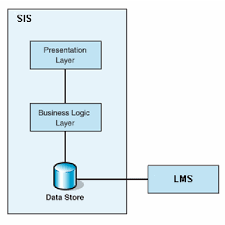
That is why today SIS systems are API-oriented and integration-based.
Which System Is More Important?
It is not either/or, but in case of necessity, a prioritizing question would be:
SIS is foundational
- In its absence, institutions will be unable to operate, report or to comply.
LMS is experiential
- It improves learning and requires SIS data to operate effectively.
In other words:
- An LMS is not a substitute for an SIS, but an SIS can be without an LMS.
The way student information systems are developing in modern times.
The current generation of the SIS systems is no longer databases.
They are:
- Cloud-based
- Secure
- Scalable
How Modern Student Information Systems Evolve
Through this evolution, the schools are able to:
- Online, hybrid, and in-person learning support.
- Compliance with data privacy rules.
- Scale operations globally.
Final Thoughts: SIS vs LMS Explained Simply
And you shall know but one thing:
- SIS manages the student
- LMS manages the learning
They make up a full-fledged digital ecosystem of education together, though they are not identical and should never be confused as such.
Want to See How a Modern SIS Works with LMS Platforms?
Most institutions opt for a loose SIS, which can be easily integrated with the widely used LMS platforms, allowing the institutions to select the most suitable tools without committing to a single platform.
Look into how the openSIS Student Information System helps provide integrated, scalable education management.
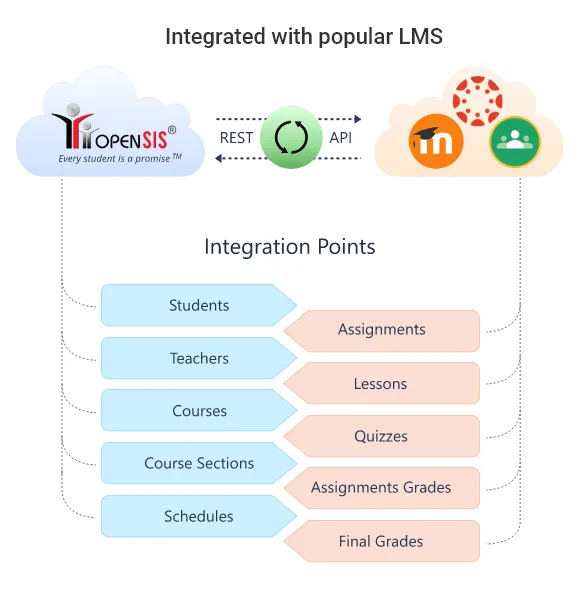
openSIS is bi-directionally integrated with popular Learning Management Systems. Students, Teachers, Courses, and Scheduling data gets automatically pushed into LMS from openSIS. Different grading components are pulled in real-time from the LMS to openSIS, thereby creating Progress Reports, Report Cards, Transcripts, and Certificates.
Below is a visual representation of the integration.